The Slogan “GUARANTEED TO KEEP YOU DRY” was Rejected by the TMO

The slogan “GUARANTEED TO KEEP YOU DRY” in classes 24 and 25 for textile and clothing sealed for water was rejected by the Trademark Commissionar on the Basis of lack of distinctive Character. The current guidelines regarding slogans is that slogans should be treated like any other trademark and could be registered if they are actually serve as a trademark and indicates the source of the goods. On December 8 2011, the District Court of Tel Aviv has ruled in the case of Eveready Battery Company Inc V. Registrar of Patents (21488-05-11), that the examination of a slogan should be the same as any other mark, without the prior assumption that a slogan lack of distinctive character by its nature . This decision was given in an appeal of decision of the Trademark Registrar in which he denied the trademark application FREE YOUR SKIN on the basis of lack of distinctiveness.

In the Decision of FREE YOUR SKIN Court has offered a test in order to decide whether a certain slogan can be registered as a trademark in Israel. The test would be whether we can presume that a consumer who enters a shop in order to buy a certain product would ask the product from the seller using the slogan? If the answer is positive than we can assume that the slogan indeed serves as a trademark and indicates the source of the goods to the consumer and therefore should be eligible for registration.

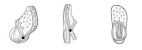
The Crocs Shoes Have Been Accepted for a Three Dimensional Trademark in Israel

The trademark application for the famous Crocs shoes was accepted by the Trademark Registrar. Crocs filed a great amount of evidence including surveys, advertisements and publications in order to base the claim that the shoes have acquired secondary meaning.

For a product to be registerable it is required to fulfill three basic conditions:
A. That as a result of an extensive use the product has acquired secondary meaning in the market.
B. That the image of the product itself is actually fulfills the role of a trademark
C. That the requested image does not possess an aesthetic or substantial functional role.

The trademark Registrar has ruled that the functional and aesthetic aspects of the Crocs shoes are minor and that the design of the shoes is not considered to be an aesthetic role given the fact that the shoes are actually quite ugly…

Israeli Trademark Application for the Shape of the Cointreau Bottle Refused

The trademark application for the shape of the Cointreau alcohol bottle was refused by the Trademark Registrar. The application covers a brown glass bottle as shown above.

The application was rejected based on the Supreme Court ruling in the Toffifee case ( AUGUST STORCK KG v. Alfa) that for a product to be registerable as a three dimentional trademark it is required to fulfill three basic conditions:

A. It has to be exceptional different from other similar container
B. It has to actually serve the function of a trademark and be considered as such by the relevant consumers
C. It has to acquire secondary meaning due to extensive use in the market.

It was ruled that the Bottle wasn’t different from other alcohol bottles exciting in the market and that the bottle shape wasn’t sufficiently distinct. Also it was ruled that the applicant had failed to provide convincing evidence that the bottle has been used as an actual trademark.

Trademark Applications for Slogans will be Examined Exactly as Any Other Mark

The Israeli Trademark Registrar has issued a new regulation regarding the eligibility of slogans as registrable trademarks. According to the Trademark Registrar, registration applications for slogans will be examined exactly as any other mark and will not be considered as lack of distinctive character.

Israeli Trademark office circular no. 29 states that for a Slogan to be registered as a mark, it must acquired a distinctive character based on actual use in the market, and it must link the goods or services to their source. Nevertheless, the circular does not exclude slogans completely from being a registrable subject matter.

On December 8 2011, the District Court of Tel Aviv has ruled in the case of Eveready Battery Company Inc V. Registrar of Patents (21488-05-11), that the examination of a slogan should be the same as any other mark, without the prior assumption that a slogan lack of distinctive character by its nature .

This decision was given in an appeal of decision of the Trademark Registrar in which he denied the trademark application FREE YOUR SKINon the basis of lack of distinctiveness.

Accordingly, the Trademark Registrar has ordered that the circular no. 29 is cancelled.

Tigris V. Puma – Battle of the Cats


The Israeli Deputy Trademark Registrar has ruled that the trademark application consisting of a Tigris figure considered as infringing Puma’s trademark in class 25 and therefore cannot be eligible for registration.

City Wash LTD is an Israeli company who manufactures different kinds of clothing. City Wash has filed a trademark application for a combination word-image mark consisting of a silhouette of a Tiger and the word “Tigris” which is tiger in Hebrew language.

PUMA, AG, is a well known German clothing company who manufactures sports clothing under the PUMA logo.

Puma has filed an opposition claiming that the Tiger mark was confusingly similar to their puma logo, and that it was non-distinctive and constitutes a dilution of Puma’s trademark rights.
Puma claimed that the mark was non-distinctive, confusingly similar to Puma’s marks and a dilution of the Puma’s mark.

The Deputy Registrar has accepted the opposition and rejected the application on the grounds of likely of confusion between the marks.

Point for thinking: It is interesting to know that there are other sports brads who uses the silhouette of a wild cat in a similar movement, that coexist with the PUMA trademark, such as Slazenger and Jaguar. It seems that no one have a monopoly over the silhouette of a wild cat in regard to sport clothing. In addition, we hardly think that there is any likely of confusion between the marks.

international trademark registration Israel

The Madrid Protocol System is officially operational in Israel

The Madrid Protocol System for filing International Trademark Applications is officially operational in Israel

The Madrid Protocol System offers trademark owners the possibility to have their trademarks protected in several countries by simply filing one application directly with the Israeli Patent and Trademark Office, designating the requested countries.

An international trademark application filed to WIPO is equivalent to an application or a registration of the same mark effected directly in each of the countries designated by the applicant.

If the trademark office of a designated country does not refuse protection within a specified period, the protection of the mark is the same as if it had been registered by WIPO.

The Madrid system also simplifies the management of the trademark protfolios, since it is possible to record subsequent changes or to renew the registrations through a single procedure and by the same local attorney.

Israel is the 85th member of the WIPO-administered international trademark system which is governed by two treaties, namely, the Madrid Agreement Concerning the International Registration of Marks (1891) and the Madrid Protocol Relating to the Madrid Agreement Concerning the International Registration of Marks (1989).

Use of translated word mark of a registered trademark, could be considered as trademark use

The Trademark Registrar: Use of translated word mark of a registered trademark, could be considered as trademark use according to law, to avoid trademark cancellation

Micys Company S.P.A filed a motion for cancellation of the registered trademark “DIVA” on the basis of lack of use according to paragraph 41 of the Trademark Ordinance.

The Trademark Registrar rejected the motion and ruled that use of translated word mark of a registered trademark, could also be considered as trademark use according to law, to avoid trademark cancellation.

The Trademark Registrar also ruled that even a use of the translated version of the mark as part of the company’s business name could consider to be use of the trademark in connection with the goods in which he manufacture or trades according to Paragraph 1 of the Trademark Ordinance.

Micys Company S.p.A v. Ronit Lahav & Co. Motion for Cancellation of Trademark No. 13296, 14630 (24/3/2010).