Israel : What is the Level of Similarity Needed to Win a Trademark Opposition?

In Israel, third parties can oppose the registration of a trademark within three months of publication by filing a trademark opposition against the requested mark. The mark will proceed to registration if no opposition is filed.

The opposer must prove that there is a likelihood of confusion between the requested mark and the opposer’s mark in order to win a trademark opposition.

To pass that bar, what level of similarity is required?

Based on reviewing several trademark opposition decisions rendered in Israel for the past two years, we have noticed that to win a trademark opposition in Israel, the opposer must show a substantial likelihood of confusion.

Even a strong similarity may not suffice. Compared to trademark systems in other countries, the standard of similarity is quite high. 

Furthermore, the Legal Expenses usually ruled by the Trademark Registrar are minimal and don’t cover the actual legal expenses the opposer has to pay during the opposition process.


The Legal Expenses usually ruled by the Trademark Registrar are minimal and don’t cover the actual legal expenses

Therefore, before filing an opposition to a trademark in Israel, it is recommended to assess the chances of success.

The table below shows the surprising results of several trademark opposition proceedings over the past two years.

Would the following oppositions be acceptable in your country? Let us know what you think.  Contact Us. 

LEGAL DISCLAIMER

Any use of this website and\or content is subject to clear and specific consent for the Terms of Use. Nothing in this website shall be deemed as any kind of legal advice or opinion.

Is There a Likelihood of Confusion Between EZ and EZ PUT?

We are thrilled to share with you the fantastic victory our firm achieved in a recent trademark opposition case. The case centered on the use of a rapper’s merchandise in connection with his trademark, and whether it constituted use beyond his music services.

Our client, EZ PUT, a company specializing in mobile phone accessories, had their trademark application opposed by Israeli rapper, EZ, who claimed that the mark was too similar to his own, well-known mark in the music services category. EZ argued that his sales of shirts and hats with his trademark should broaden the protection of his mark.

However, EZ PUT countered that there was no likelihood of confusion between the two marks, citing differences in design, style, and meaning. They also contested that EZ’s trademark was not widely known and that the sale of fashion merchandise did not constitute valid trademark use outside of music services.

The TM Registrar ultimately dismissed the opposition, fully accepting EZ PUT’s arguments, including their use of the merchandise claim. As the Registrar noted, the purchase of a shirt with a band’s name is not meant to convey the quality or origin of the shirt, but to express the wearer’s musical preferences and cultural identity.

Our client was expertly represented by Yossi Sivan – Law Firm, and we are honored to have been a part of this successful outcome.


Israel: A Trademark Owner Sued His Licensee …But Eventually Lost His Trademark

Managing a licensing business can be sometime challenging for a trademark owner.

In a licensing agreement, a trademark owner (the licensor) receives royalty payments in exchange for allowing another party (the licensee) to use his mark.

One of the risks of trademark licensing is losing control of the brand. Sometimes a licensor may find himself giving up control on material elements of his brand, such as packaging, costs, distribution in discount markets and more.

There could be also other risks such as fraud reports and losing the ability to police the licensee’s activities.

A recent case in Israel (Management Europe Meeting International v. Forum Publishing) shows that there might be another serious risk, which is losing a trademark registration as a consequence of a legal conflict with the licensee.

Here are some basic facts of the case:

Management Europe Meeting International (MEM) is the owner of the Israeli trademark PRODUCT OF THE YEAR. Forum Publishing (Forum) has signed a license agreement with MEMI (a sublicensee of MEM) for the use of the mark in Israel.

In accordance with the license agreement Forum is obligated to pay royalties to MEMI for the use of the mark PRODUCT OF THE YEAR, that allows certain manufacturers to label the mark on their product packaging for marketing purposes.

After several years a conflict erupted between MEM and Forum.

Eventually, MEM has sued Forum in the Israeli Court asking for a declaratory judgment that the license is no longer valid due to lack of trust and bad faith behavior of Forum’s manager. Alternatively, MEM has claimed that the license agreement is no longer valid since the license period has ended and not renewed.

It should be noted that those claims have been denied by the Israeli Court who decided that there were no grounds to cancel the license agreement and that there is no evidence for such a lack of trust.

The trademark owner has also raised an unusual claim in order to attack his licensee. MEM claimed that the license has never been recorded at the Trademark Office, therefore the license was not valid, and the result is that Forum has no license to use the mark.

Can a trademark owner cancel an existing trademark license by claiming that the License wasn’t recorded in the Trademark Office? 

Let’s understand the context. Why does a trademark owner need to record a license at the Trademark Office?


Let’s understand the context. Why does a trademark owner need to record a license at the Trademark Office?

According to the Israeli law (Section 41 of the Trademark Ordinance) any trademark registration that has not been in use by its proprietor for a period of three consecutive years (from date of registration) can be cancelled on the ground of lack of use. Actual commercial use in the market is required in order to meet the use requirements.

According to the Israeli case law, using the mark in Israel only by a local licensee (and not by a trademark owner) will not be considered to be “use” by the proprietor, unless the license was recorded at the Trademark Office.

In the case of A.L. 364/74 Samuel Davidovich v. Miromitt Metal Works 27 Ashkelon Ltd., PD 29 (1) 703 (9.1.75), The Supreme Court has ruled that a trademark license that wasn’t recorded is simply not valid, but the contractual license may be still valid and binding.

It is important to mention that this claim is generally raised by third parties to attack trademark owners in invalidation cases (in a lack of use claims) and not against licensees.

In the case of Management Europe Meeting International v. Forum Publishing, it was the first time that a brand owner itself has raised this claim against his licensee in order to support his claims that the license should be canceled.

Unfortunately, not only that the claim was rejected by the Jerusalem District Court, but the Court has acknowledged the fact that the license indeed wasn’t recorded in the Trademark Office and ruled that the trademark is not valid!


“Therefore, and in accordance to the Davidovitch case law, since the trademark in the country (Israel Y.S) is not registered on the name of the Defendant it’s not valid…” 


This is clearly a precedent decision since no party has challenged the validity of the registration and still the Judge took the liberty of declaring the registration as not valid.

This is clearly a precedent decision since no party has challenged the validity of the registration and still the Judge took the liberty of declaring the registration as not valid. 

This is for sure a fatal result for the trademark owner, who tried to cancel a license but ends up in cancelling his own registration.

I guess this is the classic case of a brand owner who “cuts off one’s nose to spite one’s face” in the fight against his licensee.

The conclusion is that a trademark owner needs to be very careful in managing disputes against his licensees.


Important: Trademark owners need to make sure to record their license.

Also, trademark owners need to make sure their license is recorded at the trademark Office.   

It will be interesting to know how the invalidity of the registration will affect the contractual relations between the parties. It might surely affect the ability of the licensor to negotiate new licensing deals. 

Disclaimer:
Nothing in the above shall be considered as any legal advice or any legal opinion whatsoever. This is just an informative article. We strongly recommend consulting with a professional attorney in such matters.


Israel : Does Rebottling Chanel Perfume Constitute Trademark Infringement?

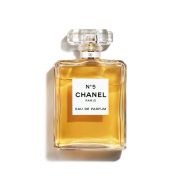
Sent-Wish is a small local business who buys original perfumes such as Chanel, Tom Ford, Chloe, Hermes and Burberry via parallel import from overseas vendors, pours the perfume to small refill bottles and then sells the new refill bottles to consumers using the manufacturer’s name.

The bottles are sold with a package that carries a disclaimer that the products do not have any affiliation with the manufacturer.

Photo for impression only

Chanel has decided to confront Sent-Wish and sent Cease and Desist letters to Sent-Wish demanding to remove all bottles from the market and to refrain from using Chanel’s trademark.

Sent-Wish company responded by filing a Motion for a Declaratory Judgment asking the Court to declare that the rebottling of the original perfume does not infringe Chanel’s trademark.

Chanel claimed that the use of Chanel’s trademark for selling unauthorized refill bottles constitutes trademark infringement and dilution.

In addition, Chanel claimed that the sale of the perfume in unauthorized bottles damages Chanel’s reputation, the value of the brand and the quality of the original perfume.

Chanel also claimed that the rebottling materially changes the original product, therefore considered to be an infringement.

Sent-Wish responded by claiming that their actions do not damage the basic component and nature of the original perfume and that the use of the name Chanel considered to be “True Use” of Chanel’s mark for the purpose of reselling the perfume legally bought in the market, therefore do not constitute an infringement.

Judge Tamar Avrahami agreed that there is a possibility that the rebottling might reasonably change the quality of the perfume but decided that this assumption is not enough since the question of trademark infringement must be decided based only on implementing section 47 of the Trademark Ordinance.

According to section 47, the use of a trademark without the authorization of the trademark owner is not considered to be an infringement if the use of the mark qualifies as “True Use” in the market, which relates to the original essence or quality of the product.

Judge Avrahami than implemented the three tests that were acknowledged by the Supreme Court to determine whether the use of Chanel’s mark considered to be “True Use” in the market:

Identification Test: Whether the product can be identified without using the mark.

The Essentiality of the Use Test: Whether the use of the mark is essential and reasonably required.

The Affiliation Test: The use of the mark doesn’t imply that the use is authorized or approved by the trademark owner.

Following the implementation of the three tests above and based on the fact that the new bottles were labeled with a disclaimer, Judge Avrahami has decided that the rebottling of Chanel’s perfume considered as True Use of the mark regarding the original product, therefore does not constitute trademark infringement.

In light of the Court’s findings regarding the actual use of the mark, Judge Avrahami ruled that Sent-Wish is entitled to resell the perfume by rebottling and to use Chanel’s mark to indicate the fact that the perfume sold in the bottles is the material ingredient and for identification purposes.

My estimation is that an appeal will certainly follow. 

This does not constitute as a any legal opinion, and it is strongly recommended to consult with knowledgeable lawyers in this field.

Who Filed the Most Israeli Trademark Applications in 2018?

The Israeli Patent and Trademark Authority has recently published a report for the year 2018 which exhibits the statistics and activities of the Israeli Patent and Trademark Authority for the year 2018.

The following are the main statistics taken from the 2018 report:

2018 has shown a steady level in both national and international trademark filings in Israel according to the 2018 Patent and Trademark Office published by the Israeli Patent and Trademark Authority (see 2017 Patent and Trademark Office Report)

A total of 10,686 trademark applications were filed in 2018: 5,799 international applications and 4887 national applications.

Apple Inc. has filed the most trademark applications in Israel: 61 international applications and 27 national applications. This is the second year that Apple Inc. is taking the place of the number one trademark applicant in Israel. Israel’s mobile industry is thriving especially in the categories of mobile apps and mobile technology.

Novartis holds the second place with a total of 55 applications: 50 national applications and only 5 international applications.

Sanrio Company holds the third place with 54 national applications and 0 international applications.

Jonson & Jonson holds the fourth place with a total of 45 applications: 44 national applications and only 1 international application.

75.6% of the applicants in 2018 were foreign companies and 24.4% were local.

24.4% of the applicants are from Israel, 20.9% are from the US, 7.2% are from Germany and 7.2% are from China.

Yossi Sivan, Trademark Attorney

Yossi Sivan, Trademark Attorney

Owner & General Partner at Yossi Sivan & Co. Law Offices


The 2017 Israeli Patent and Trademark Authority Report

The Israeli Patent and Trademark Authority has recently published a report for the year 2017 which exhibits the statistics and activities of the Israeli Patent and Trademark Authority for the year 2017. The following are the main statistics taken from the 2017 report.

TRADEMARKS

During the 2017 year, the examination period for trademark applications in Israel has been shortened to a period of 12 months (in relation to the previous year where the examination period was 16 months).

In the year 2017 there was an increase of 14% of trademark applications filed in Israel. 55% of the applications were international applications based on the Madrid Protocol, and 45 % of the applications were national applications.

The number of international applications based on the Madrid Protocol has risen by 19% and the number of national applications has risen by 9%.

The applicant with the greatest number of applications was Apple Inc. with 81 applications. The second is Johnson and Johnson with 71 applications, followed by Phillip Morris with 57 applications and Huawei Technologies with 51 applications. The highest number of applications (21.6%) were filed by U.S. applicants. Applicants from Israel made up 24.2% of applications and China 6.6% of applications.

DESIGNS

The New Design Law, which replaced the Patent and Design Ordinance of 1924 was confirmed by the Israeli Parliament and became valid as of August 7, 2018. The leading foreign applicants for design in Israel were Facebook (54), Scania (29), and Dyson Technologies (26).

PATENTS

In 2017, there were 6,813 patent applications filed in Israel. The foreign applicants with the most patent applications were Facebook (94 applications), Phillip Morris (82 applications), and Raytheon Company (62 applications). In 2017, 89.9% of the applicants of patent applications were foreign citizens/companies and 10.1% of the applicants were local applicants.

A copy of the report can be downloaded from here: https://en.calameo.com/read/00566845929ff1d51897c


Recommended by the World Trademark Review as an Israeli Trademark Expert

We are pleased to inform you that our firm has been recommended by the World Trademark Review as an Israeli Trademark Expert:

Other recommended experts category:

“…. Yossi Sivan & Co’s storied entertainment star Yossi Sivan has represented giants such as Sony, Electronic Arts and Microsoft; he is as formidable at enforcing trademarks as he is at filing them…”


Who Filed the Most Trademark Applications in Israel?

2016 has shown a considerable decrease in trademark filing in Israel according to the 2016 Patent and Trademark Office Report.  

There is a reduction of 8.7% in the number of National trademark application filed by local attorneys in Israel. There is also a reduction of the number of international applications) Madrid Protocol) filed in Israel (6.13%).

Apple Inc. has filed the most trademark applications in Israel (54).

Abercrombie & Fitch has filed the most international trademark applications in 2016 (46 applications, with no national applications at all).

A total of 1,365 national trademark applications have been filed in Israel and a total of 708 international trademark applications have been filed by foreign applicants.


Legal 500 Recommendation as a Leading Intellectual Property Firm for 2017

Legal 500 2017 Recommendation: 

Yossi Sivan & Co. Law Offices has been recommended by the LEGAL 500 2017 edition as an Israeli leading firm in the Intellectual Property Disputes category:

Yossi Sivan & Co. has ‘extraordinary knowledge and expertise in trade mark and copyright litigation’. The ‘practical and personable’ Yossi Sivan has extensive experience of IP cases involving international clients…” 

The Diamond of the Crown – No likelihood of Confusion between IGL and CGL

Israel’s diamond industry is estimated at around 4 billion dollars a year. Israel considered as one of the strongest players in the international diamond market. Naturally, there is fierce competition in the industry, a competition that sometimes reaches the court’s doorstep.

Recently the Israeli District Central Court has ruled a very important decision in trademark matters concerning the diamond industry.

IGL, a gemological laboratory that provides assessment, analysis and grading services of diamonds jewelry and gemstones under mark IGL, has sued another gemological laboratory for the use of the mark CGL.

IGL has claimed that the mark CGL is an infringement of the IGL registered trademark.

In addition to a monetary compensation of NIS200,000 and a permeant injunction,  IGL has also filed a motion for a temporary injunction to prevent the use of the mark CGL until the final decision by Court.

IGL’s claims

IGL has claimed that the use the mark CGL and the designed logo constitutes trademark infringement, passing off and unlawful exploitation of its reputation.

IGL also claimed that the use of the similar logos and colors (black and gold) causes confusion in the market.

Below are the design marks of IGL and CGL:

CGL’s claims

CGL, represented by Yossi Sivan & Co. Law Offices has claimed that the motion is groundless, and that its sole purpose was to temper the successful activities of CGL.

CGL has claimed and demonstrated that the use of the words I, G and L are a common practice in the gemological diamond industry and that the acronyms IGL are not identified exclusively with IGL.

CGL has also claimed that the use of a round designed seal next to three acronyms letters are a common practice in the gemological industry, therefore cannot be identified by the consumers as related specifically to IGL.

CGL further argued that there is no likelihood of confusion between the marks based on the triple test: The visual test, the phonetic test and type of goods and consumers test.

CGL further argued that they provide professional diamond and gemstone evaluation services primarily to diamond dealers and merchants and that this is a sophisticated audience that is well acquainted with the companies involved in the field and can distinguish very well between the services provided by the IGL and the services of CGL ie, professional evaluations of diamonds, which are also accompanied by different visual appearance.

CGL has also claimed that diamonds are considered to be the most expensive products and require careful examination, which eliminates any likelihood of confusion in the market.

In addition, CGL argued that it’s manager has a considerable reputation of almost 40 years in the diamond market therefore, there is no reasonable possibility that a diamond merchant will arrive to CGL’s laboratory and will erroneously believe that it is related to IGL, who are unknown in the field.

The Court’s Decision

Following the submission of pleadings, conducting cross-examination of the party’s witnesses and oral summaries, the Central District Court of Lod has decided as follows:

The Court has found that, despite the alleged similarity of the round shape that symbolize a seal, there are substantial differences in the decorations of the logo, which add additional differences in the letters and wording of the marks.

The Court stipulated that these differences exclude a reasonable possibility of visual likelihood of confusion between the marks.

Applying the type of goods and consumers test, the District Court has accepted the CGL’s position that gem and diamond assessment services are services based on professional criteria, which include careful examination of a laboratory, preparation of a report, evaluation and finally the issuance of an appropriate certificate.

The Court was impressed that providing such services will usually be accompanied by the purchase of precious stones in a considerable amount of money and that it’s not a “shelf product,” but rather a unique product, that is directed to a sophisticated customer, which reduces the likelihood of confusion.

The District Court was also impressed that the CGL’s owners are veteran and well-known in the diamond industry, and that these circumstances do not support the claims of IGL that CGL “rides” on the reputation of IGL, considering the relatively short period in which IGL operates in the diamond market.

The District Court also relies on many trademarks submitted by CGL’s attorneys, whose mark consists of a circular seal structure, three capital letters in English and an accompanying inscription to the side or below the combination of the letters and the logo.

Naturally, as befits gemstone products, the combination of colors with the same symbols and letters is done in gold, black and blue, colors that symbolize prestige.

The District Court also accepted CGL’s position that the initials in the IGL sign represent the words “international gemological and laboratory” and that these are generic names which, for the most part, enjoy less protection than arbitrary names.

Under these circumstances, the District Court held that the IGL’s registered mark has a weak inherent distinctive character, and that IGL did not present any significant evidence indicating that the registered mark had required a distinctive character, meaning that the consumers are linking it to the services provided by IGL.

In conclusion, the District Court held that the triple test did not support the claim of a likelihood of confusion.

The Court also rejected the passing off claim and ruled that there is no likelihood of confusion between the services and that CGL did not prove their reputation.

Applying the balance of convenience test, the District Court has ruled that it was not convinced that the use of the CGL mark would cause irreversible damage or serious damage to IGL.

In conclusion, the District Court rejected the motion for a temporary injunction and ordered IGL to pay legal costs of NIS 9,500 to CGL.

Disclaimer: Nothing in the foregoing shall constitute any legal advice or any opinion whatsoever. This is an informative article only and it is well recommended to consult with a specialized attorney.

CGL was represented by Yossi Sivan & Co. Law Offices


The Legal 500 - The Clients Guide to Law Firms